
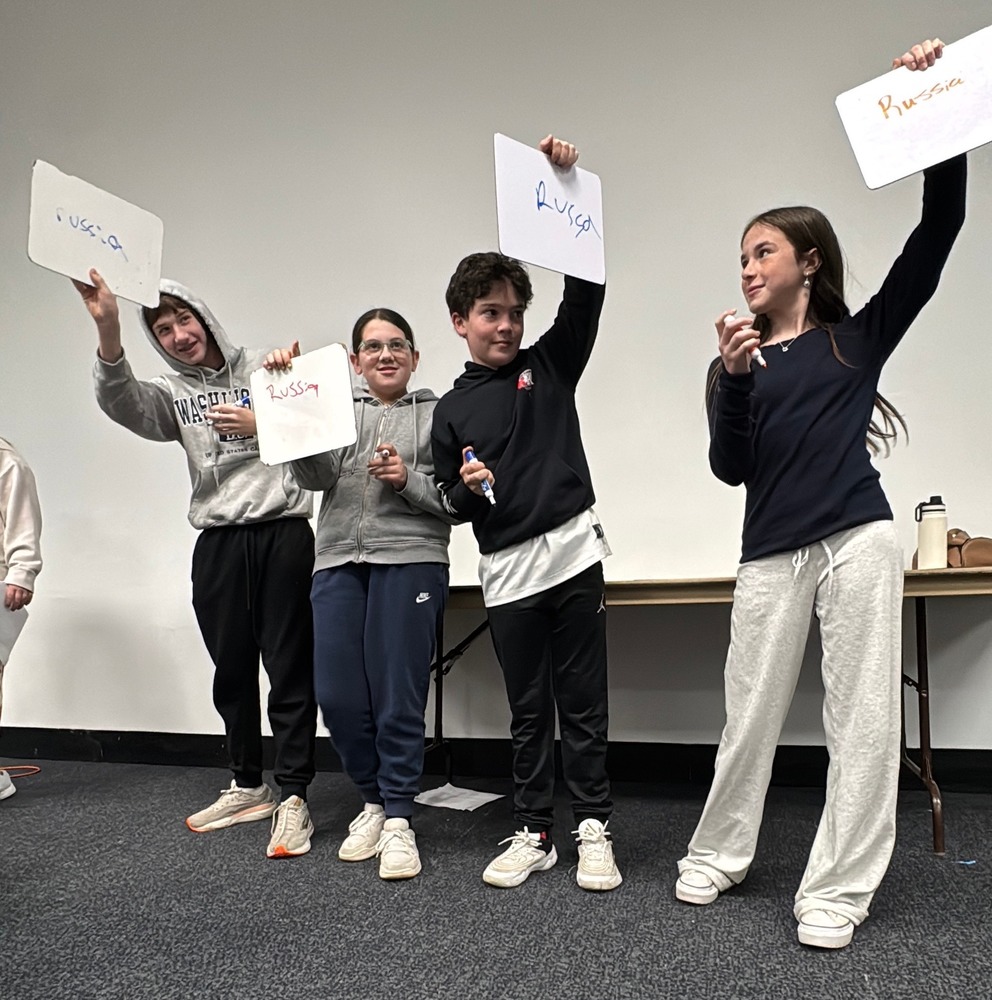
 On a day when Israeli schools honor Eliezer Ben-Yehuda, the father of modern Hebrew, Smith Jewish Academy joined classrooms across Israel in celebrating Hebrew as a living, evolving language.
Students in grades 2-3, 4-5, and middle school took part in a schoolwide Hebrew Tournament, testing their knowledge through friendly competition that blended vocabulary, grammar, comprehension, and cultural learning. The format —adapted from similar competitions in Israeli schools — was designed to challenge students at every level while keeping the experience joyful and inclusive.
As the tournament progressed, students didn’t just rely on what they already knew. They prepared by reviewing new vocabulary, learning about Ben-Yehuda’s role in reviving Hebrew, and deepening their understanding of how language reflects culture and history. Winners emerged from each division, including students across a range of ages and backgrounds — underscoring that growth in Hebrew is about effort, confidence, and curiosity, not just fluency.
The tournament was envisioned and led by b’not sherut Klil-Or Katz and Oriya Shapira, who serve Smith Jewish Academy through a partnership with Darchei Noam. As part of Israel’s Sherut Leumi (National Service) program, they brought an Israeli school tradition to life — creating a celebration of Hebrew that blended language, culture, and joyful competition across grade levels. Working closely with Hebrew Coordinator Maayan Scholder, their collaboration ensured that the event was grounded in strong pedagogical intention and educational depth — not simply a competition, but a meaningful and purposeful language-learning experience.
This celebration comes at a meaningful moment for the school. As Smith Jewish Academy strengthens and standardizes its Hebrew curriculum through national benchmarks and assessments, events like the Hebrew Tournament offer a powerful reminder of why the work matters. Rather than perfection, the tournament was about engagement, courage, and using language actively.
Scholder describes Hebrew not simply as a second language, but as a gateway to Israeli culture, music, stories, and shared experience. “Hebrew is how we bring Israel into the classroom,” she noted. “It’s about communication, identity, and connection."
The tournament reflects the balance Smith Jewish Academy strives for every day: rigorous academics paired with creativity and joy. As students cheered one another on, celebrated wins, and stretched themselves in new ways, they embodied what Hebrew learning at Smith is meant to be — alive, meaningful, and growing stronger each year.