
At Smith, Jewish tradition becomes curriculum, community, and celebration
Ask a Smith student what they learned about Sukkot this year and you might get some unexpected answers.
A kindergartner might tell you about programming a robot to shake a lulav and etrog. An older student might explain why the Torah describes 70 bulls being offered over the course of Sukkot. Another might tell you about eating lunch in the sukkah — or building an edible one with friends. And a student who came to Davening & Donuts might simply remember the experience of standing alongside parents, teachers, and classmates and shaking the lulav and etrog together.
That range is part of what makes Jewish learning at Smith distinctive. The holidays aren't confined to Jewish studies class. They become part of the curriculum, the school day, and the life of the entire community.
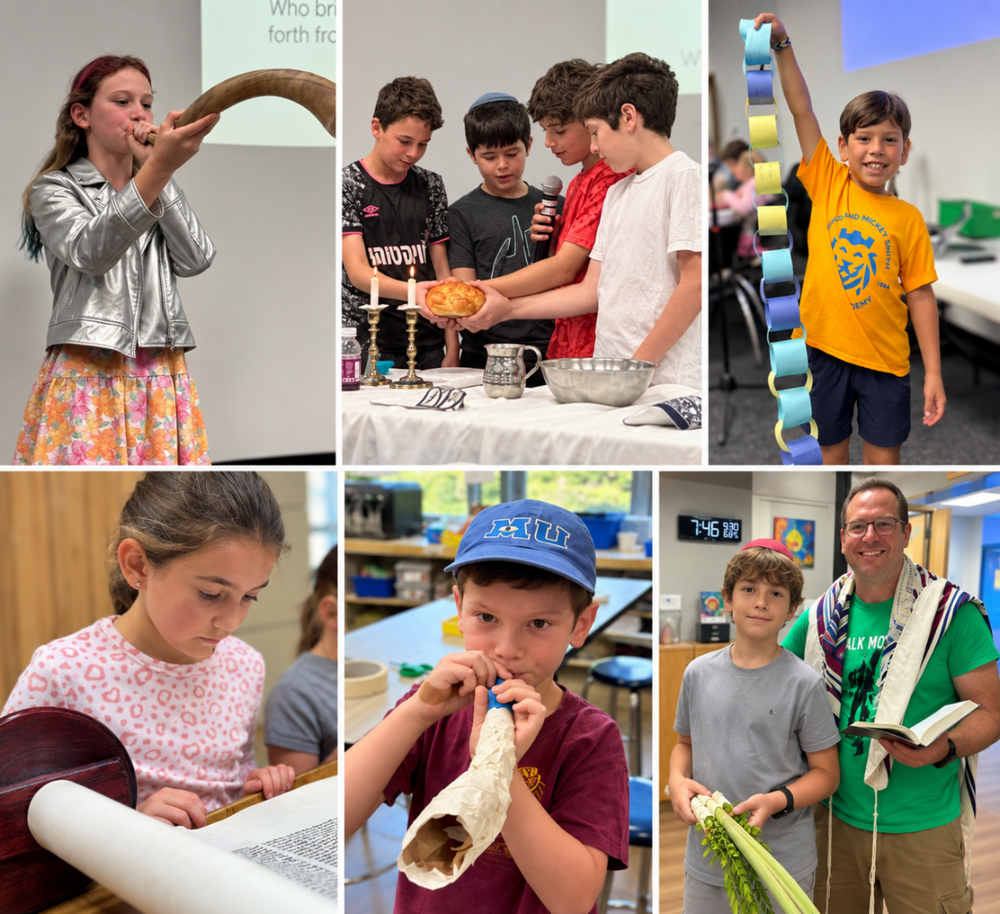
This fall, that began even before Rosh Hashanah. First graders combined Jewish learning with hands-on creativity in the Makerspace, constructing working papier-mâché kazoo shofars. Sixth graders took responsibility for leading an all-school tekes (ceremony), connecting Rosh Hashanah's theme of remembrance with the 25th anniversary of September 11 and challenging their school community to enter the new year choosing unity and goodness.
As Yom Kippur approached, students moved from celebration to introspection. Each considered a regret from the year behind them and a resolution for 5787. Their individual reflections were joined into a single paper chain — a visual reminder that the work of becoming our best selves is both deeply personal and something we undertake in community.
Then came Sukkot, and Jewish learning filled the days.
Students fulfilled the mitzvah of leshev basukkah by eating in the sukkah. PTO's Pizza in the Hut brought families together for food, crafts, and community. Kindergartners programmed Dash robots to shake the lulav and etrog. Students built edible sukkot during All-School Lunch. And at Davening & Donuts, families had the opportunity to perform the mitzvah themselves.
But alongside all that joy was serious learning. During All-School T'filah, students listened as HaMoreh Avi chanted Torah in Moroccan trope and explored the unusual pattern of the Sukkot offerings — counting down from 13 bulls to seven for a total of 70, followed by the dramatic shift to just one on Sh'mini Atzeret. A student's question — “Can you really be commanded to feel joy?” — opened a conversation connecting Sukkot, Kohelet, and the Jewish understanding of joy, gratitude, and the complexity of holding celebration and sadness at the same time.
And then the whole school came together for Simchat Torah — singing, dancing, and celebrating Torah as one k'hillah kedoshah, one holy community.
This is what it means for the Jewish calendar to live at the center of a school.
Students don't just learn about a shofar; they make one and hear it. They don't just identify a lulav and etrog; they shake them — and sometimes program a robot to do it, too. They don't simply read that Sukkot is z'man simchateinu, the season of our joy; they wrestle with what Jewish tradition means by joy and then experience it with their community.
The learning can be ancient and contemporary, serious and playful, intellectual and deeply personal — sometimes all in the same day.
And for a few extraordinary weeks each fall, you can see — and hear and taste — that everywhere you look.